Cyrillic alphabet
Born in Bulgaria at the end of the 9th century, it is now written from Belgrade to Vladivostok.
1In brief
Born in Bulgaria at the end of the 9th century, it is now written from Belgrade to Vladivostok.
Type: Alphabet — Each letter stands for a sound, consonant or vowel. Understand types of scripts.
2History
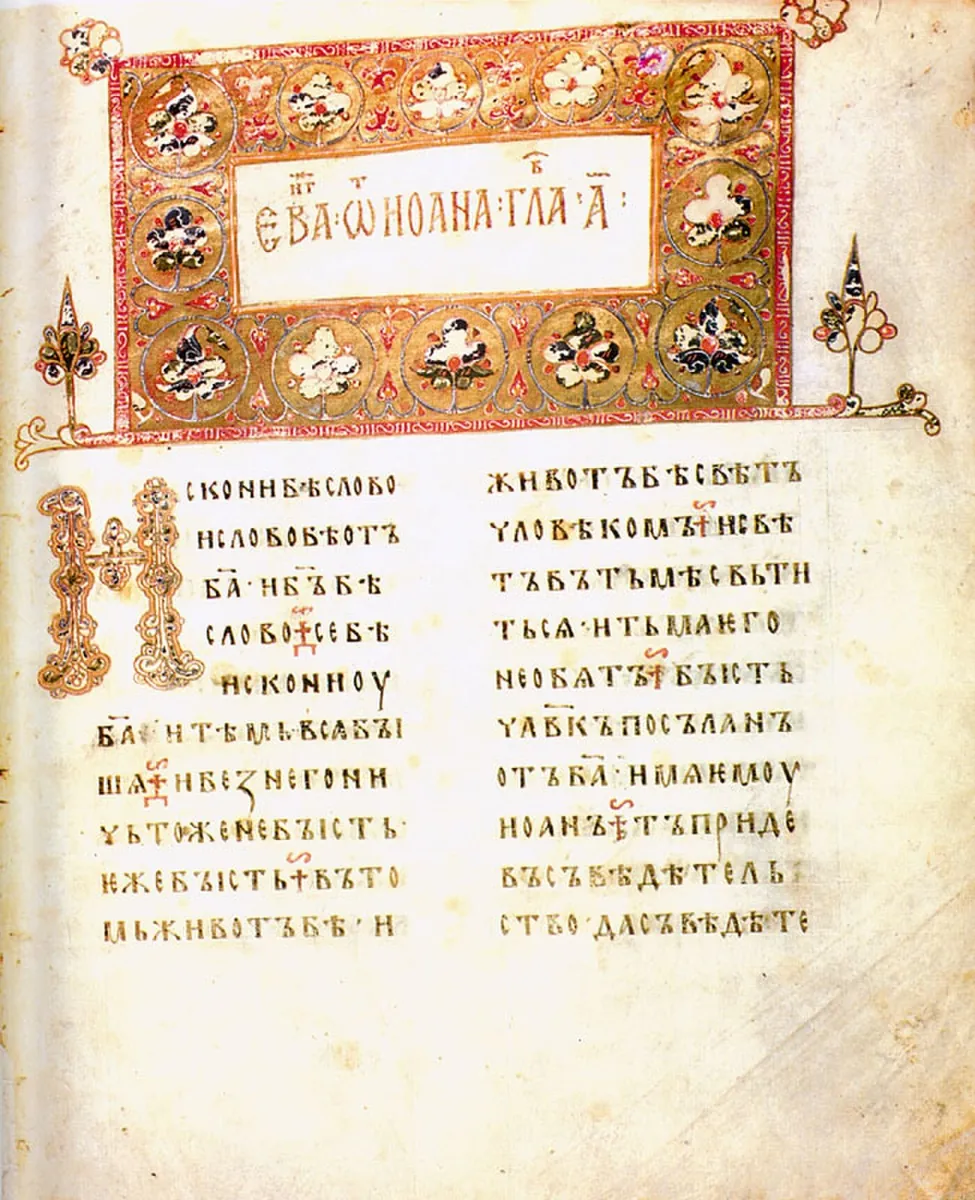
Cyrillic was devised towards the end of the 9th century in the First Bulgarian Empire, by the disciples of the monks Cyril and Methodius. It is based mainly on Greek letters, with new letters for Slavic sounds such as ж, ш or ч. It is named after Saint Cyril, who had invented a different script a few years earlier, Glagolitic.
Today it is used for more than fifty languages, Slavic (Russian, Ukrainian, Bulgarian, Serbian…) or not (Kazakh, Mongolian…). Peter the Great modernised it around 1710, and the Russian reform of 1918 removed several more letters.
3A word to see
4For real
5Lineage
It descends from
6Did you know?
- Since Bulgaria joined the European Union in 2007, Cyrillic has been the EU’s third official script, alongside Latin and Greek.
- The word “azbuka” (alphabet) comes from the old names of the first two letters, az and buki.