Tifinagh
The script of the Berbers, from ancient Libyco-Berber to Moroccan street signs.
1In brief
The script of the Berbers, from ancient Libyco-Berber to Moroccan street signs.
Type: Alphabet — Each letter stands for a sound, consonant or vowel. Understand types of scripts.
2History
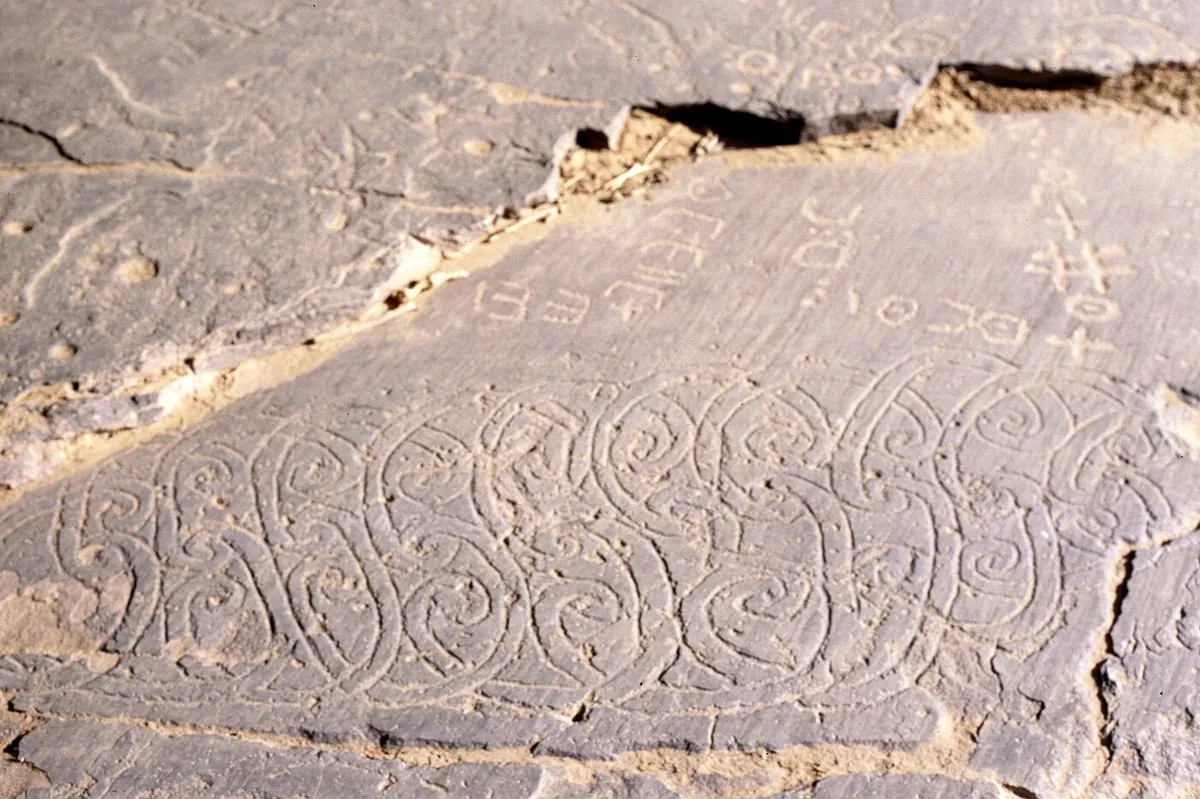
Inscriptions in the Libyco-Berber script, the ancestor of Tifinagh, have covered rocks in North Africa and the Sahara since antiquity; a monument at Dougga, in Tunisia, carries a text in Libyco-Berber and Punic from the 2nd century BC. The Tuareg kept this script, Tifinagh, often passed on by women; it only wrote consonants and could be written in any direction.
In the 20th century, Amazigh cultural activists created a Neo-Tifinagh with vowels. Morocco made it a standard in 2003, and Tamazight has been an official language in Morocco since 2011 and in Algeria since 2016.
3A word to see
4For real
5Lineage
It descends from
6Did you know?
- The letter ⵣ (yaz) stands at the centre of the Amazigh flag: it symbolises “the free man”.
- In Morocco, many official signs are written in Arabic, Tifinagh and often French.