Tibetan script
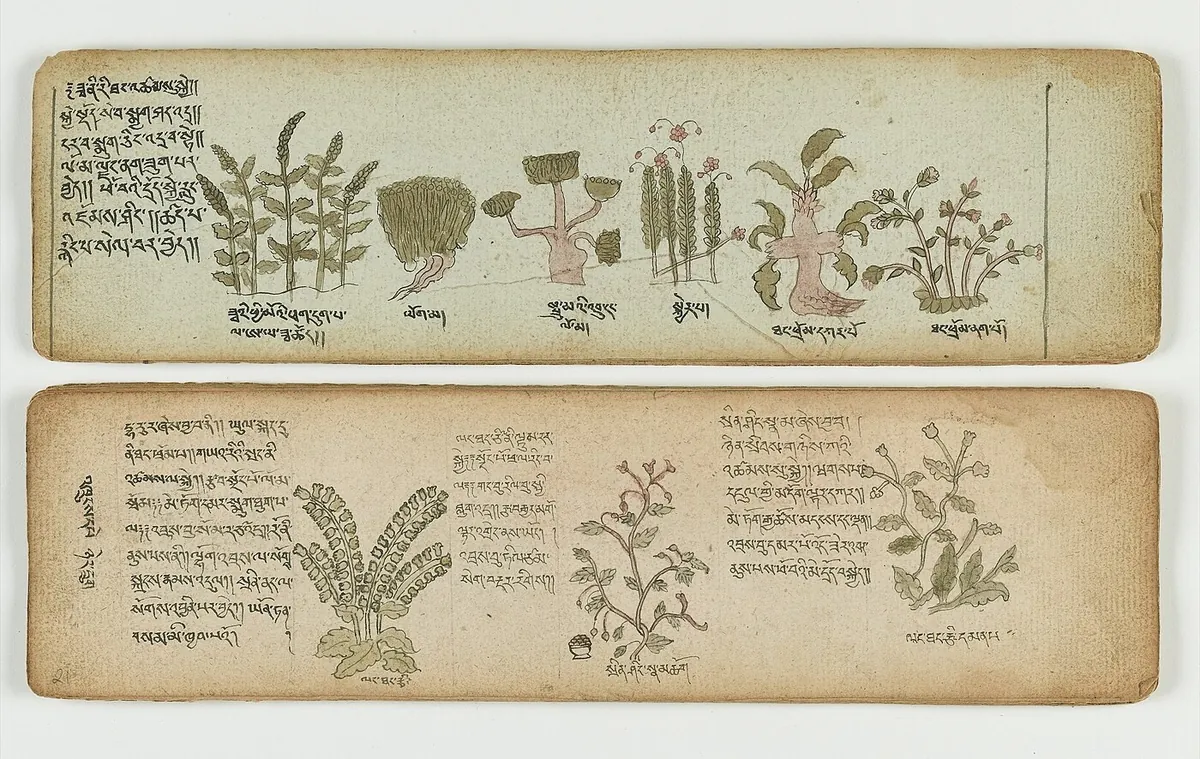
Created in the 7th century from an Indian model, it separates each syllable with a dot.
1In brief
Created in the 7th century from an Indian model, it separates each syllable with a dot.
Type: Abugida — Each sign is a consonant with a built-in vowel, changed by small marks. Understand types of scripts.
2History
According to tradition, King Songtsen Gampo sent his minister Thonmi Sambhota to India in the 7th century to bring back a script; he adapted one for Tibetan. This script was used to translate huge numbers of Buddhist texts from Sanskrit.
Each syllable is separated from the next by a small dot placed at the top. The spelling has changed little since the 9th century, while pronunciation has changed a lot: many letters are no longer pronounced. You write bkra shis but say “tashi”.
3A word to see
4For real
5Lineage
It descends from
6Did you know?
- The Tibetan script is also used for Dzongkha, the official language of Bhutan.
- Prayer flags fluttering in the Himalayan wind are covered with texts in Tibetan script.