Traditional Mongolian script
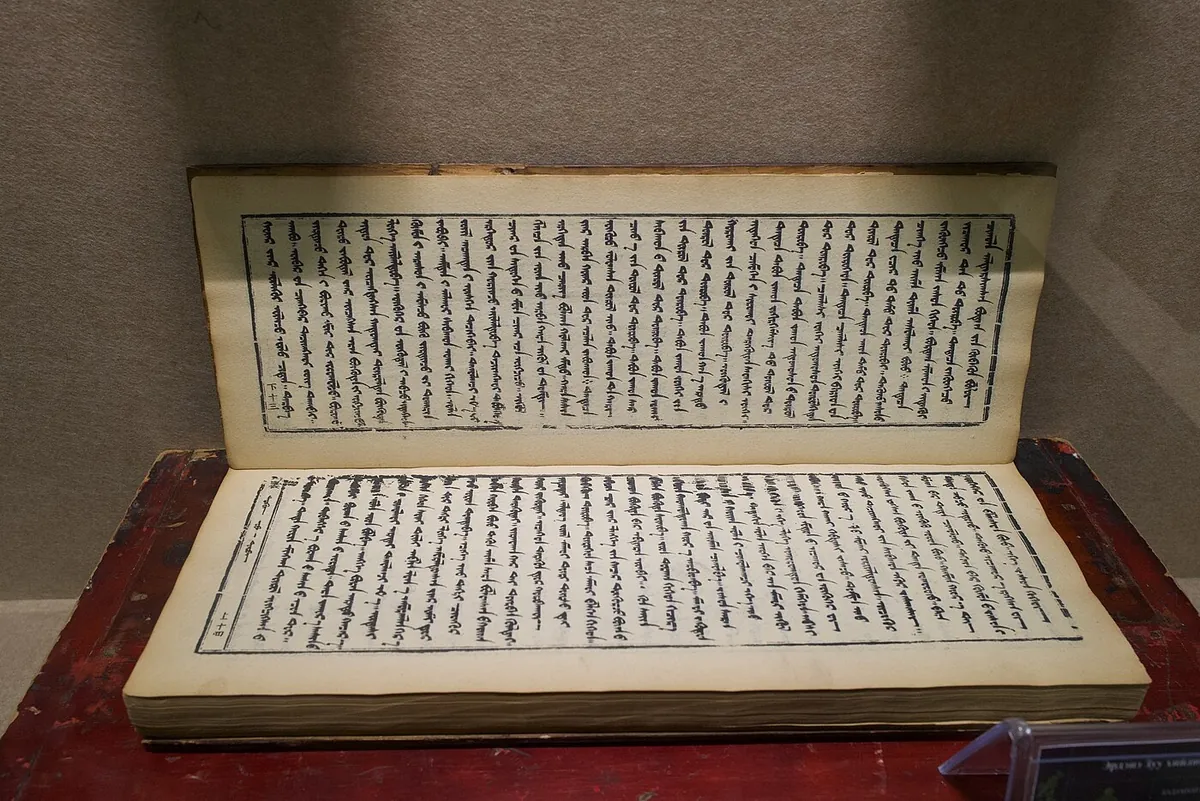
One of the few vertical scripts whose columns run from left to right.
ᠠ ᠡ ᠢ ᠣ ᠤ ᠥ ᠦ ᠨ ᠪ ᠬ ᠭ ᠮ ᠯ ᠰA few signs of this script.
1In brief
One of the few vertical scripts whose columns run from left to right.
Type: Alphabet — Each letter stands for a sound, consonant or vowel. Understand types of scripts.
2History
Around 1204, Genghis Khan had the Uyghur script adopted for Mongolian; it came from Sogdian, itself descended from Aramaic. To write it vertically, scribes rotated the lines: you write from top to bottom, in columns that follow each other from left to right.
In Mongolia, the Cyrillic alphabet replaced the traditional script in the 1940s, but it never disappeared: it is taught at school and is returning in official documents. In China, in Inner Mongolia, it has always remained in use.
3A word to see
ᠮᠣᠩᠭᠣᠯ
mongɣol
“Mongolian”
4For real
5Lineage
It descends from
6Did you know?
- The letters are joined along a vertical spine, like beads on a thread.
- The script was adapted for Manchu, the language of the emperors of China’s last dynasty.