1In brief
The oldest known script, made of wedges pressed into clay.
Type: Logographic — Many signs stand for a word or an idea, combined with sound signs. Understand types of scripts.
2History
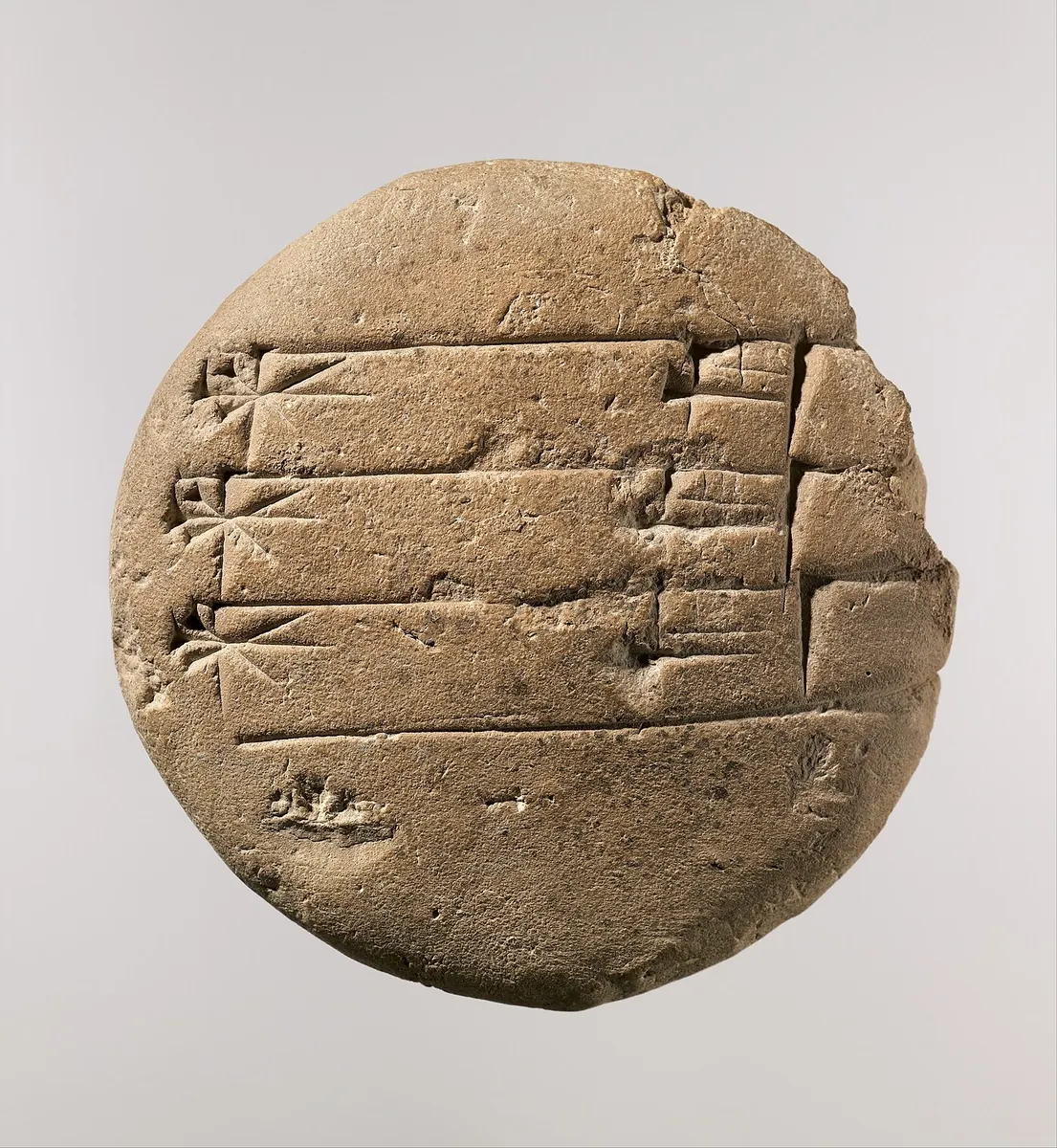
Around 3300 BC, in Uruk, Mesopotamia (present-day Iraq), accountants began recording quantities and goods on clay tablets. Little by little the drawings became groups of wedge-shaped strokes pressed in with a cut reed: this is cuneiform, from the Latin cuneus, “wedge”.
For more than 3,000 years it was used to write some fifteen languages, including Sumerian, Akkadian, Hittite and Old Persian: laws, letters, contracts and poems such as the Epic of Gilgamesh. The last known tablet, an astronomical one, dates from the 1st century AD.
3A word to see
4For real
5Lineage
This script has no known ancestor among the scripts shown here: it was invented locally, or its origins are still debated.
6Did you know?
- Hundreds of thousands of tablets have been found: clay baked in fires has survived remarkably well.
- The Code of Hammurabi, carved around 1750 BC, is written in cuneiform; the stele is in the Louvre.